
Ash Grange Nursery and Primary School
Safeguarding (Child abuse)
Child Protection
Safeguarding children is paramount and is the basis for all policy and practice. The school staff are trained to support children’s development and follow the government guidelines on child protection. All staff, visitors and regular volunteers are subject to child protection checks with the police and local authority.
Our Designated Safeguarding Lead (DSLs) are:
- DSL Mrs Marie Curtis (Headteacher)
- Deputy DSL – Mrs Ali Rumsby
Our School policy explains how we manage concerns and what you can do if you have any concern, please follow the link below to the policy:
Sometimes we may need to share information and work in partnership with other agencies when there are concerns about a child’s welfare. We will ensure that our concerns about our pupils are discussed with his/her parents first unless we have reason to believe that such a move could endanger the child’s welfare.
Child abuse reporting (outside of school)
Child abuse is when a child is intentionally harmed by another person – it can be over a period of time but can also be a one-off action. It can be physical, sexual or emotional and it can happen in person or online. It can also be a lack of love, care and attention – this is neglect.
Domestic abuse is any type of controlling, bullying, threatening or violent behaviour between people in a relationship. It can seriously harm children and young people and witnessing domestic abuse is child abuse.
You can find out more about the types of abuse on the NSPCC website.
If a child has a worry outside of school we have created an alert form for them to use: Worry Form It can feel scary to have a worry and it helps to talk it through and work out how to manage this worry. You can talk to a trusted adult, sibling or friend at home or at school. You can call Childline too on 08001111. Do you have a worry that you need to share with an adult at school? if so complete this form or talk to an adult at school as soon as you can. If you fill in this form it will go to Mrs Curtis and she will come and talk to you about it the next day you are in school
If you’re worried that a child or young person is at risk or is being abused contact the children’s social care team at their local council.
For Surrey the website is www.surreycc.gov.uk/social-care-and-health/childrens-social-care/contact-childrens-services
- Concerns for a child or adult: Call 0300 470 9100 (available 9am to 5pm, Monday to Friday)
- Concerns of domestic abuse: Call 01483 776 822 (available 9am to 9pm, 7 days a week)
- Out of hours: Call: 01483 517 898
For Hampshire the website is www.hants.gov.uk/socialcareandhealth/childrenandfamilies/contacts
- Concerns for a child: Call 0300 555 1384 (Monday to Thursday 8.30am to 5pm, Friday 8.30am to 4.30pm)
- Concerns for an adult: Call 0300 555 1386 or the police on 101.
- Out of hours: Call: 0300 555 1373
You’ll be asked for your details, but you can choose not to share them.
Call 999 if the child is at immediate risk, or call the police on 101 if you think a crime has been committed.
More information is available at https://www.gov.uk/report-child-abuse
- If an adult has any concern about the safety or welfare of a child at Ash Grange, please complete this form or contact the Designated Safeguarding Leader (DSL) Mrs Curtis or the deputy DSL Mrs Rumsby. The dedicated email address is: [email protected]
- Concerns about a staff member, supply teacher, volunteer or contractor If you have concerns about a member of staff (including a supply teacher, volunteer or contractor), or an allegation is made about a member of staff (including a supply teacher, volunteer or contractor) posing a risk of harm to children, speak to the headteacher as soon as possible. If the concerns/allegations are about the headteacher, speak to the chair of governors, the contact email is [email protected]
- Where you believe there is a conflict of interest in reporting a concern or allegation about a member of staff (including a supply teacher, volunteer or contractor) to the headteacher, report it directly to the local authority designated officer (LADO).
0300 123 1650 (select option 3 for the Duty LADO)/Email: [email protected]
NSPCC and Child Line
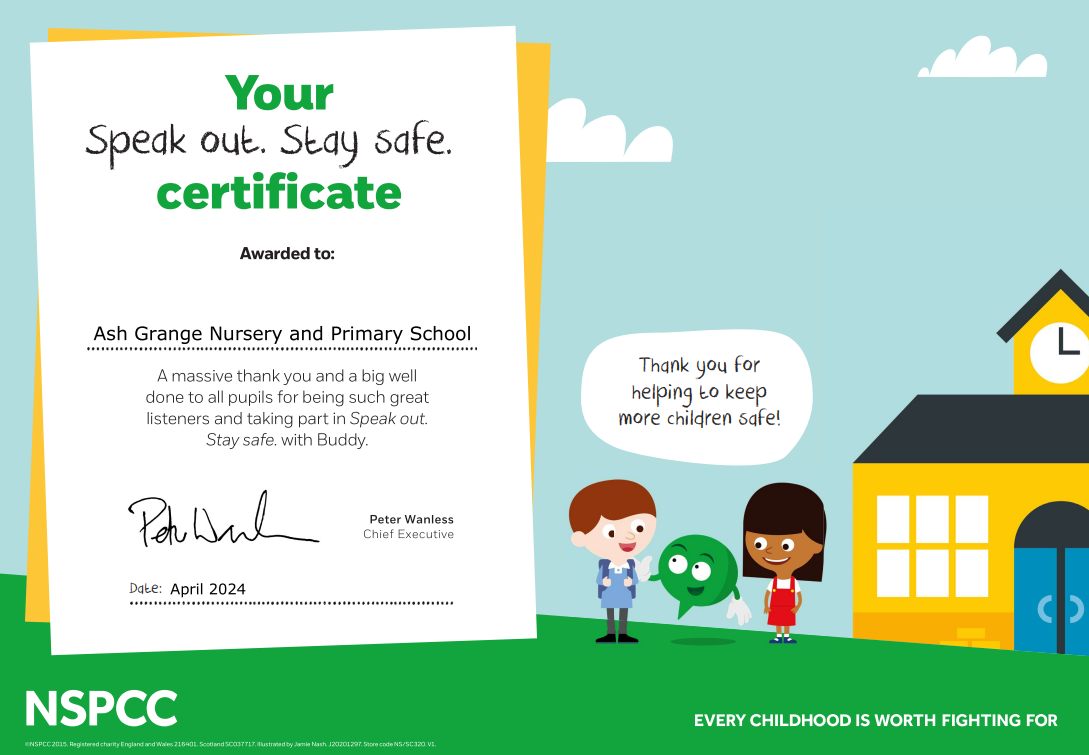
Through assemblies, PSHE lessons and special events children are taught how to keep safe and speak out when something or someone makes them feel unsafe.
Each year the children learn through the NSPCC campaigns what is harm and how to get help for self and others, this is then followed up with lessons and in other terms of the year this is shared through School Councillor and Whole School assemblies.
Here are the links for the resources that will support you talking with your child about these important things at home:
Talking PANTS with your children
Talk PANTS is a simple conversation to help keep your child safe from sexual abuse. You can find out more and download the free resources on our website. www.nspcc.org.uk/pants
Penguin and Ladybird have also partnered with the NSPCC to create a brand new Pantosaurus book aimed at children ages 4 - 8. The book is available in English and they will also ensure the content is made available in Welsh. All profits from the sale of this book will support the NSPCC. You can find copies of the new book on sale, either in Matalan’s selected stores and online, selected SPAR stores or at: https://shop.nspcc.org.uk.
Childline link page is: https://www.childline.org.uk/ or call 0800 1111
There are lots of wonderful resources available to parents, please open the document below to see more.
Prevent Strategy
Prevent is a government strategy designed to stop people becoming terrorists or supporting terrorist or extremist causes. The Prevent strategy covers all types of terrorism and extremism, including the extreme right wing, violent groups and other causes. As a school we have due regard to prevent people being drawn into terrorism. In order to protect children in our care, we must be alert to any reason for concern in the child's life at home or elsewhere.
Staff are trained to identify children who may be vulnerable to radicalisation and know what to do when they are identified. Protecting children from the risk of radicalisation is part of our safeguarding duties.
As a school we build our children's resilience to radicalisation by promoting British Values and how to challenge extreme views. Developing children's spiritual, moral, social and cultural development is at the centre of all we do. Our school is a safe space where they can understand the risks associated with extreme views and develop knowledge and skills to challenge these views. We are aware of the increased risk of online radicalisation and teach our children how to keep themselves safe online. We have suitable filtering systems in place to ensure that children are safe from terrorist and extremist material when accessing the internet in school.
Our PSHE and Relationship curriculum, Me Time and Assembly programme enables children to explore sensitive issues and equips them with the knowledge and skills to understand and manage difficult situations. They are taught ways to recognise and manage risk, make safe choices, and recognise when pressure from others threatens their own wellbeing. Children are taught to develop positive character traits through our school values.
For more information on the Government's PREVENT strategy, please click the link here. For more information on our school policy please see the Safeguarding Policy.
If you have any concern regarding a child or adult in relation to extremist views or behaviours please inform the DSL Mrs Curtis in person or through the admin team in the office.